Edinburgh · Loft Boarding Results
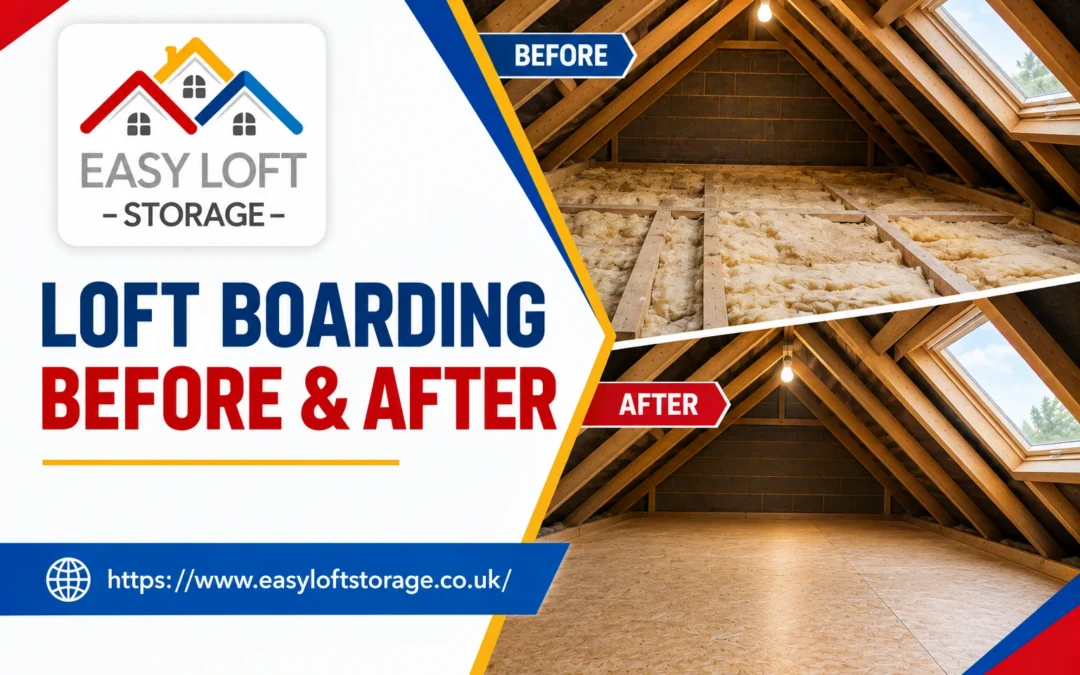
A loft boarding before and after photo makes it look simple: dusty void in, tidy floor out. What the photo doesn’t show is how easily a good “after” turns into a disappointing one.
What this guide covers
- Loft boarding before and after: what actually changes
- The “before”: what an unboarded loft really costs you
- Common loft boarding mistakes that ruin the after photo
- How much to get loft boarded: a quick reality check
- Can you board a loft yourself? A short, honest answer
- Edinburgh, Leith, Corstorphine and Musselburgh: real before and after scenarios
- Who’s behind this guide
- Frequently asked questions
Key Takeaways
- A genuine loft boarding before and after isn’t just visual. It changes usable storage, insulation performance, and how safe the space is to move around in.
- Most disappointing “after” results trace back to a handful of common loft boarding mistakes, not bad luck.
- How much you pay to get a loft boarded depends on size, insulation condition, and whether the floor is raised or fixed to the joists.
- You can board a loft yourself for a small, simple space, but the same mistakes that spoil DIY results are avoidable with a proper survey.
- Every loft has a weight limit. Ignoring it is one of the fastest ways to turn a good “after” into a problem.
Before and after photos are everywhere in loft boarding marketing, and for good reason. The transformation from a cramped, dusty void to a clean, usable floor is genuinely striking. What rarely gets shown is the loft where the “after” didn’t quite work out: insulation flattened, boards creaking, a corner nobody can safely reach.
This guide looks at what a real before and after actually involves, the mistakes that separate a good result from a disappointing one, and what that means for your own loft.
Loft Boarding Before and After: What Actually Changes
The obvious change in any loft boarding before and after comparison is visual. A loft goes from bare joists, loose insulation, and awkward crawling to a flat, walkable floor. But the more important changes are the ones you don’t see in a photo.
A properly boarded loft protects the insulation beneath it instead of crushing it, keeps airflow moving to prevent condensation, and turns an unsafe space, where one wrong step can go through the ceiling, into somewhere you can genuinely store belongings without worry.
The “Before”: What an Unboarded Loft Really Costs You
An unboarded loft isn’t just wasted space. Items get pushed against the eaves where insulation is thinnest, boxes sit directly on joists risking damage to the ceiling below, and access is often limited to a narrow path between exposed timbers. None of this is dangerous by design, but it adds up to a space that quietly goes unused.
Before booking any work, take your own “before” photos. Not for marketing, but so you have a clear record of insulation depth and loft condition to compare against once the job is done.
What a Good Survey Should Check Before You See an “After”
A worthwhile before and after starts with what happens before any boards arrive. A proper survey should look at current insulation depth across the whole loft, not just near the hatch, check joist spacing and condition, note the position of water tanks, cables and any structural obstacles, and confirm the loft hatch is large enough to bring materials through comfortably.
Skipping any of these steps is how a promising before ends up with a compromised after, whether that means insulation left thin in one corner or a floor that stops short of a section that was never properly measured.
Common Loft Boarding Mistakes That Ruin the After Photo
Most poor loft boarding results come down to a short list of common loft boarding mistakes, repeated across DIY jobs and rushed professional ones alike.
| Mistake | What it causes |
|---|---|
| Boarding straight onto joists | Compressed insulation, reduced heat retention |
| Ignoring weight limits | Sagging boards, bent joists, ceiling damage |
| Blocking eaves ventilation | Condensation and damp over time |
| Standing on plasterboard, not joists | Ceiling collapse below |
| Skipping a proper survey | Uneven floor, missed obstacles, wasted material |
Most of these show up quickly if you know what to look for. A floor that feels slightly springy underfoot, insulation visibly flattened in patches, or a musty smell after a few months are all early signs that one of these mistakes has already happened, even if the loft still looks fine at a glance.
Assuming a boarded floor means unlimited storage. Joists have limits, and older properties often sit well below the standard figure. Heavy, densely packed boxes are where “after” problems usually start.
How Much to Get Loft Boarded: A Quick Reality Check
How much it costs to get a loft boarded depends on the area covered, current insulation depth, and whether the floor is raised on support legs or fixed directly to the joists. A small storage area with good existing insulation costs far less than a full loft needing an insulation top-up first.
Rather than guessing from a national average, a free survey gives an accurate figure for your specific loft, since access and joist condition both affect the final price.
Can You Board a Loft Yourself? A Short, Honest Answer
Yes, for a small, simple loft with easy access and no major obstacles. The mistakes covered above apply just as much to DIY loft boarding as they do to a rushed professional job, so the difference isn’t really DIY versus professional, it’s whether the person doing the work understands what protects the insulation and the structure underneath.
For a full breakdown of what’s in a typical DIY kit and where it works best, see our loft boarding kit guide. For everything else, our own loft boarding team handles the survey, insulation check, and raised flooring installation as one visit, which is often the deciding factor for anyone weighing up a weekend project against a single, planned appointment.
Edinburgh, Leith, Corstorphine and Musselburgh: Real Before and After Scenarios
The starting point for a loft boarding before and after varies noticeably across Edinburgh’s housing stock.
Leith tenements
The “before” here is often a small, awkward loft with limited headroom and older insulation. The “after” focuses on making the most of a genuinely tight space rather than a dramatic size increase.
Corstorphine semis
Typical 1930s lofts start with reasonable headroom but patchy insulation. The before and after here usually includes an insulation top-up alongside the new floor.
Musselburgh new builds
Newer lofts often start close to full insulation depth already, so the transformation is mostly about adding safe, walkable access rather than fixing existing problems.
For the full journey from empty loft to finished storage, see our complete guide to loft storage in Edinburgh.
Who’s Behind This Guide
This guide is written from hands-on experience surveying and boarding lofts across Edinburgh and the surrounding area, including Leith, Corstorphine and Musselburgh, where before and after starting points vary widely.
Easy Loft Storage uses a raised flooring system that is BBA approved and NHBC compliant, fitted by our own trained team, so every “after” is built to protect insulation and structure, not just look tidy.
Load-bearing figures referenced in this guide are sourced from the British Standards Institution and were accurate at the time of writing.
Frequently Asked Questions
What actually changes in a loft boarding before and after?
Beyond the visual change, a proper installation protects insulation from compression, maintains airflow, and turns an unsafe, joist-only space into a floor you can walk and store items on safely.
What are the most common loft boarding mistakes?
Boarding directly onto joists, ignoring weight limits, blocking eaves ventilation, standing on plasterboard instead of joists, and skipping a proper survey are the most frequent causes of a disappointing result.
How much does it cost to get a loft boarded?
Cost depends on the area covered, current insulation depth, and whether a raised support system is used. A free survey gives the most accurate figure for your specific loft.
Can you board a loft yourself?
Yes, for a small loft with straightforward access. The same mistakes that spoil professional jobs can also spoil DIY ones, so understanding what protects insulation and structure matters more than who does the work.
How much weight can a boarded loft actually hold?
New-build trusses are typically designed for around 25kg per square metre of long-term storage, plus a temporary point load for someone walking across. Older properties should be assumed to hold less unless checked.
Get an After You’ll Actually Be Happy With
Book a free survey and we’ll assess your loft’s insulation, structure and layout before recommending the right approach.
Get a Free Loft Survey →


